On my final day in Cape Town, I visited Beaumont Primary School. They are an Eco-School. Eco-Schools is an international organization that encourages students to take the lead in making their schools more environmentally sustainable by taking a series of specific steps, while also taking into account their school’s unique circumstances. Beaumont has been an Eco School for 15 years. You can learn more about what they’ve accomplished during those years here.
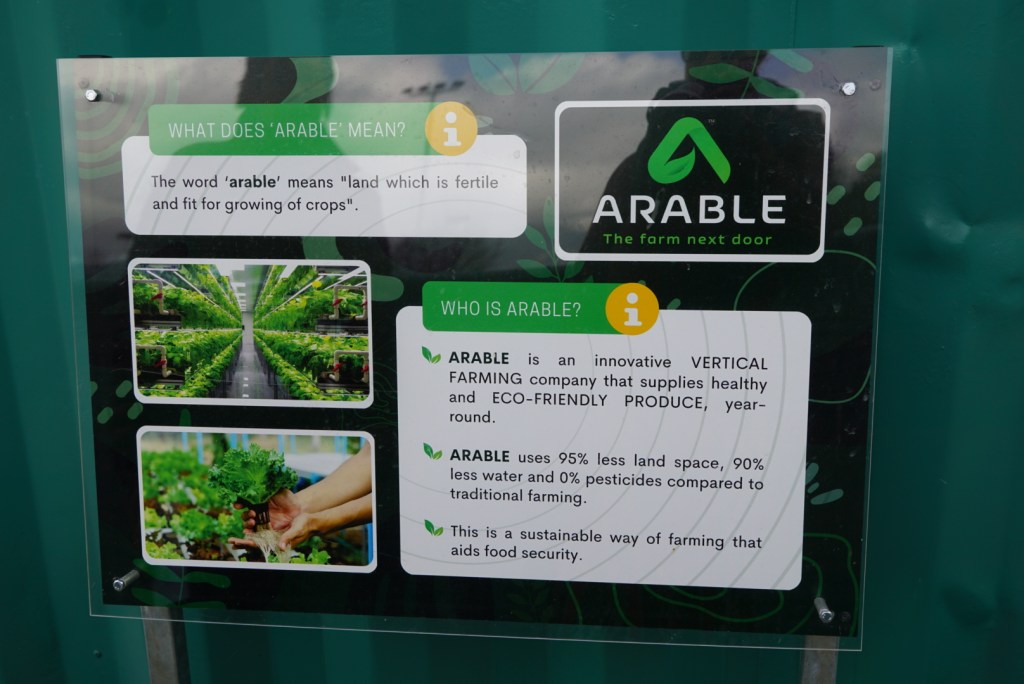
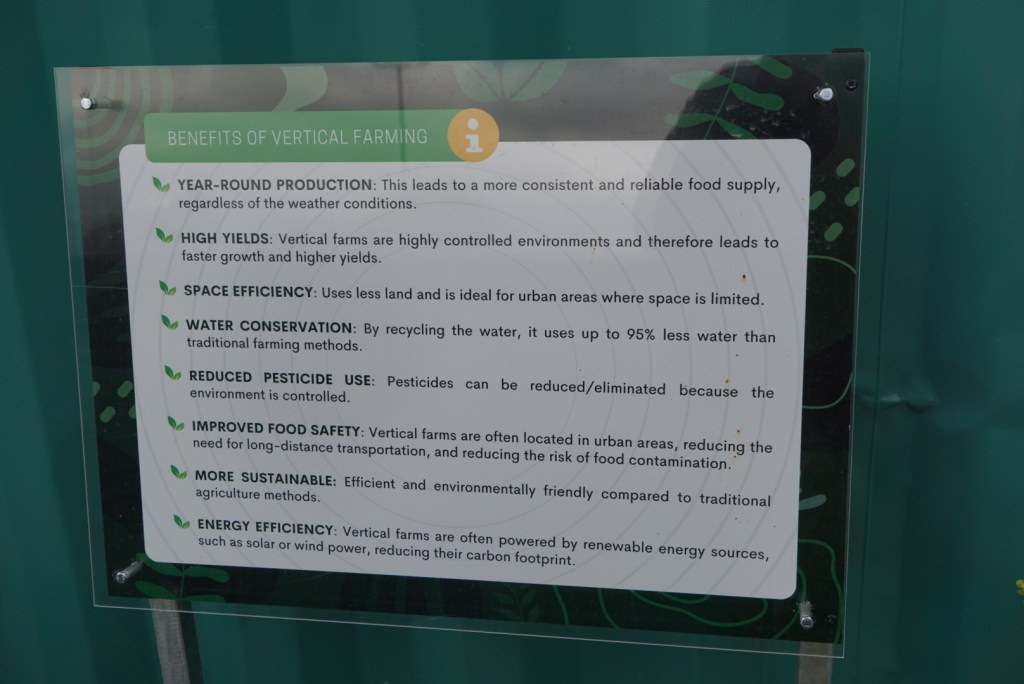
Joanne Trinchero, the Deputy Head, gave me a tour of the school. The first thing she showed me was the new hydroponic garden in an old shipping container on campus in partnership with Arable. Arable is using growing technology that can ensure that plants can thrive year-round regardless of weather, using no pesticides, very little land, and very little water compared to traditional farming methods. Because of the controlled environment to ensure the health of their plants, so I had to wear a special suit to go inside! They were growing lots of different herbs, vegetables, and fruits inside. The 7th grade students at Beaumont have been working on the topic of water and are getting to learn from this partnership. All students and visitors, can see the information posted outside of the garden.
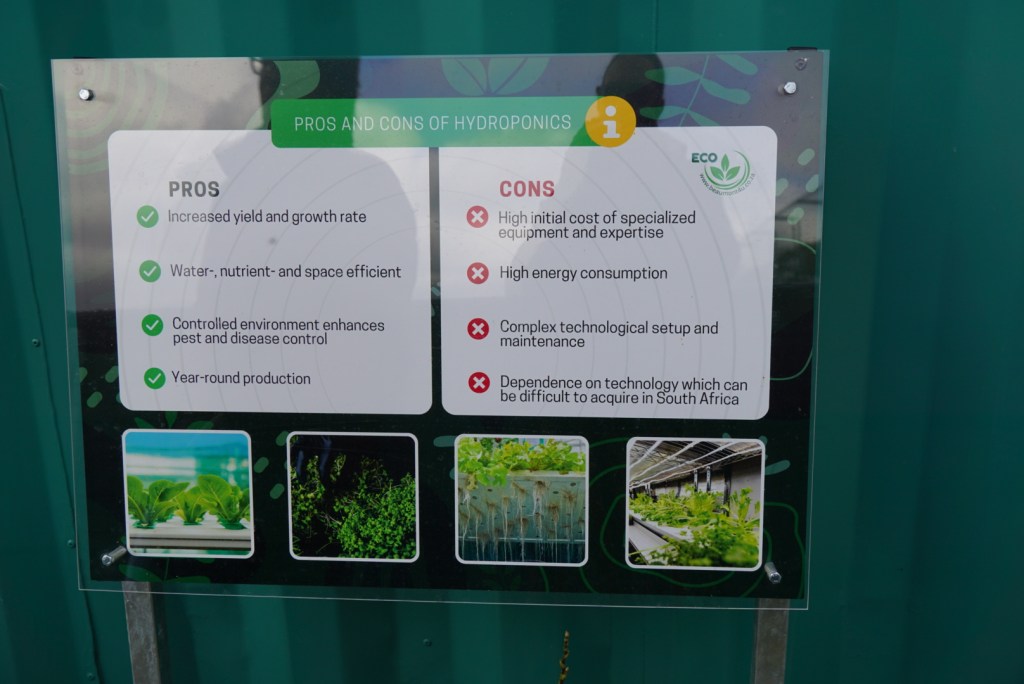
Beaumont has solar panels, which presumably helps to reduce the carbon footprint and cost of the high energy consumption.
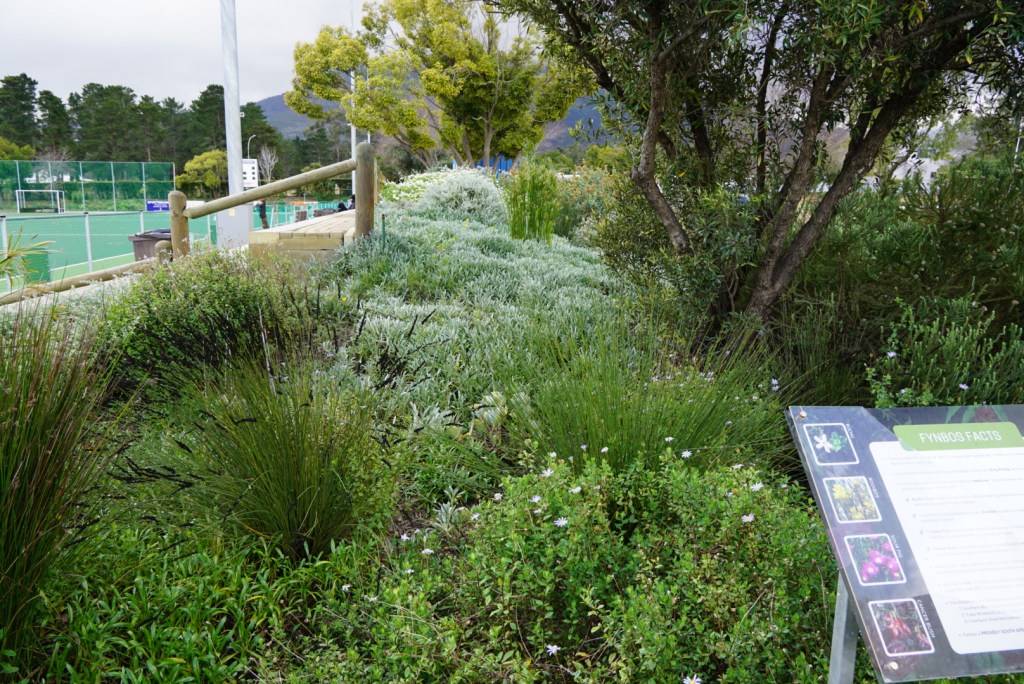
Signs like these can be found throughout the school on different topics. The school has a fynbos garden, which is a type of vegetation endemic to South Africa.
The recycling bins on campus are clearly labeled and also have informational placards.
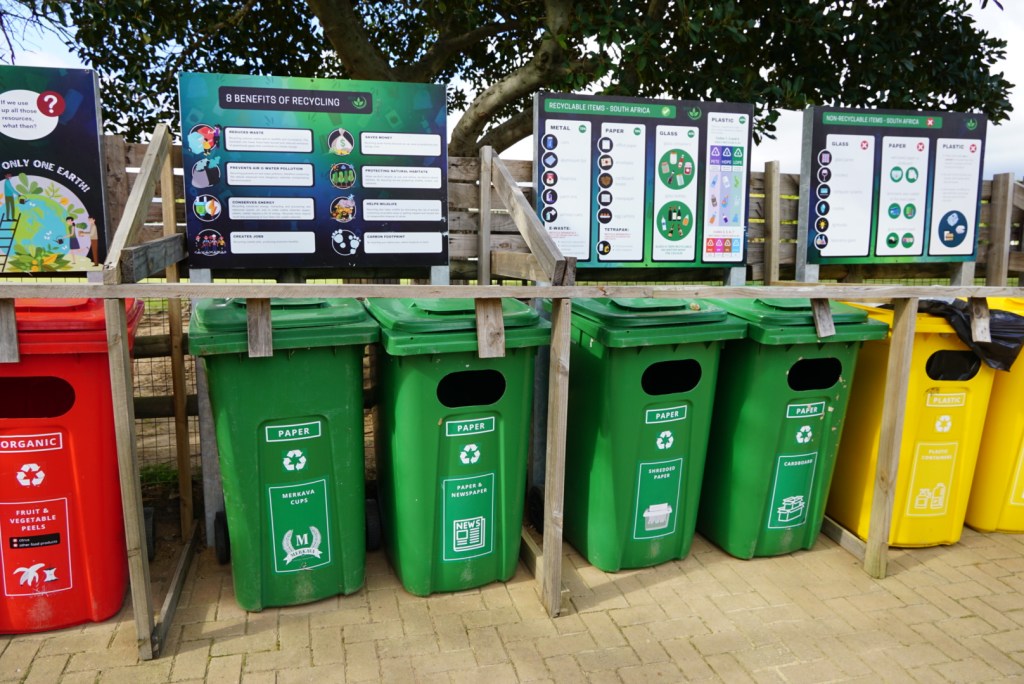
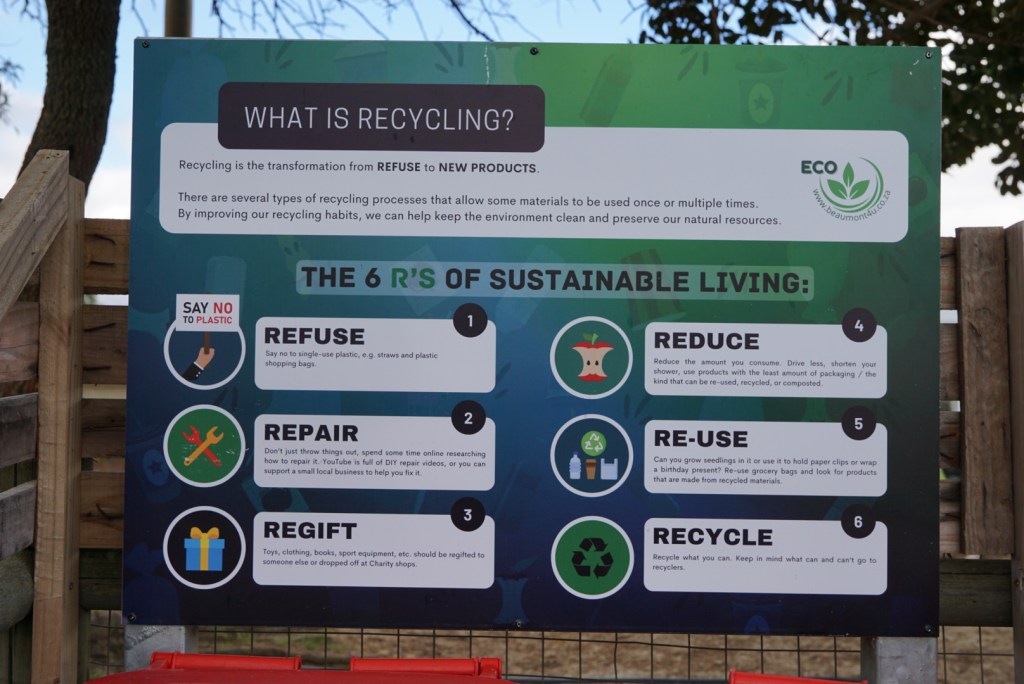
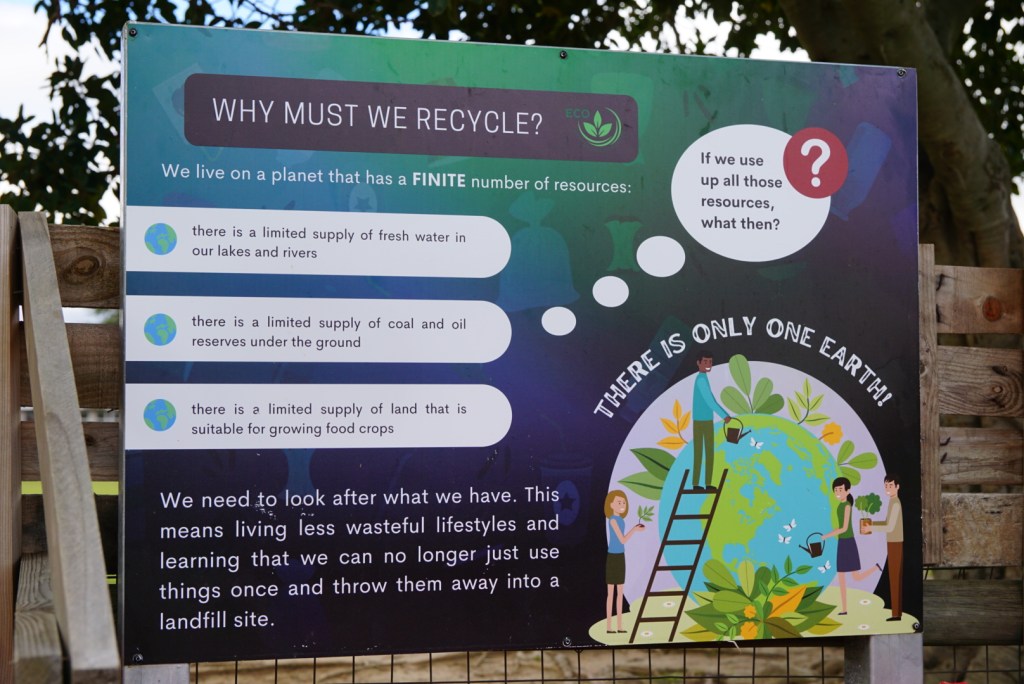
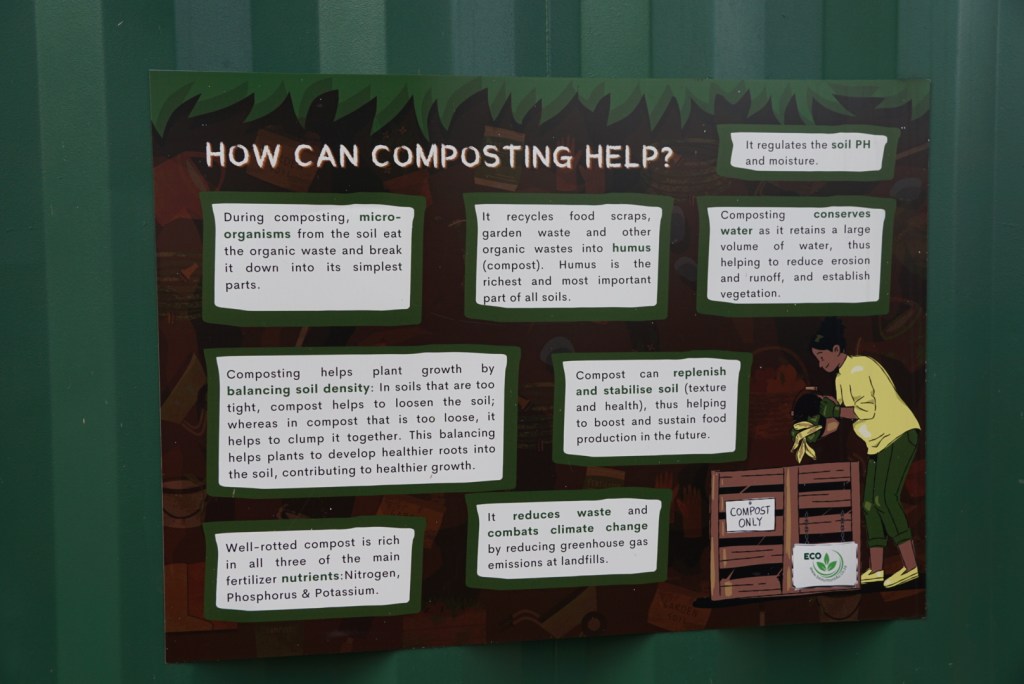
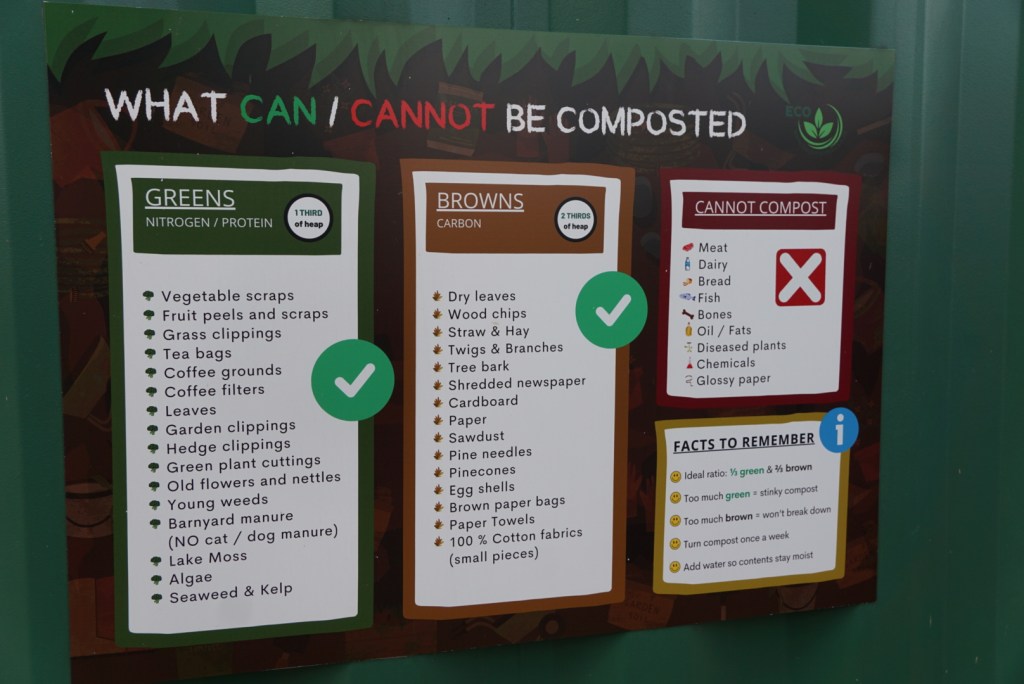
Students in each grade level take responsibility for certain parts of campus. I believe that the first graders are in charge of compost. There were more informational signs in the compost area.
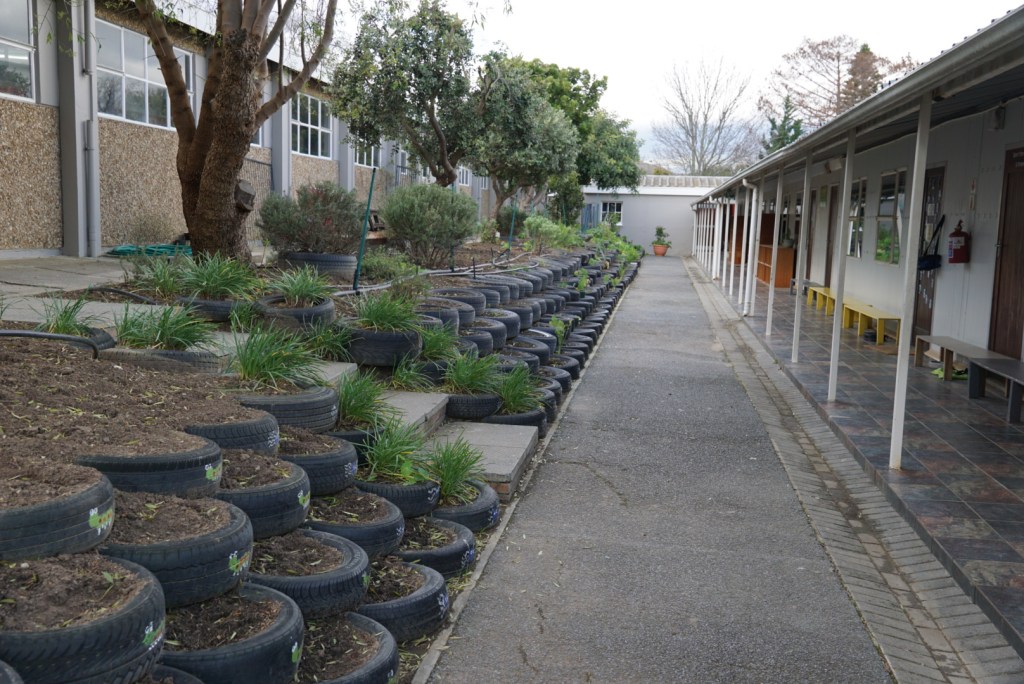
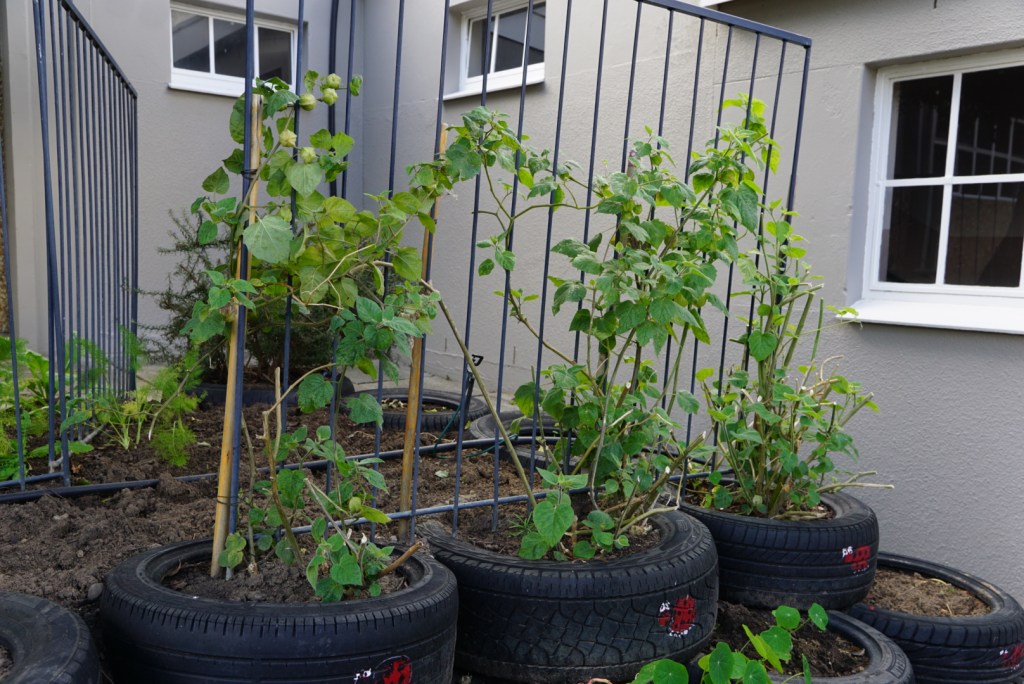
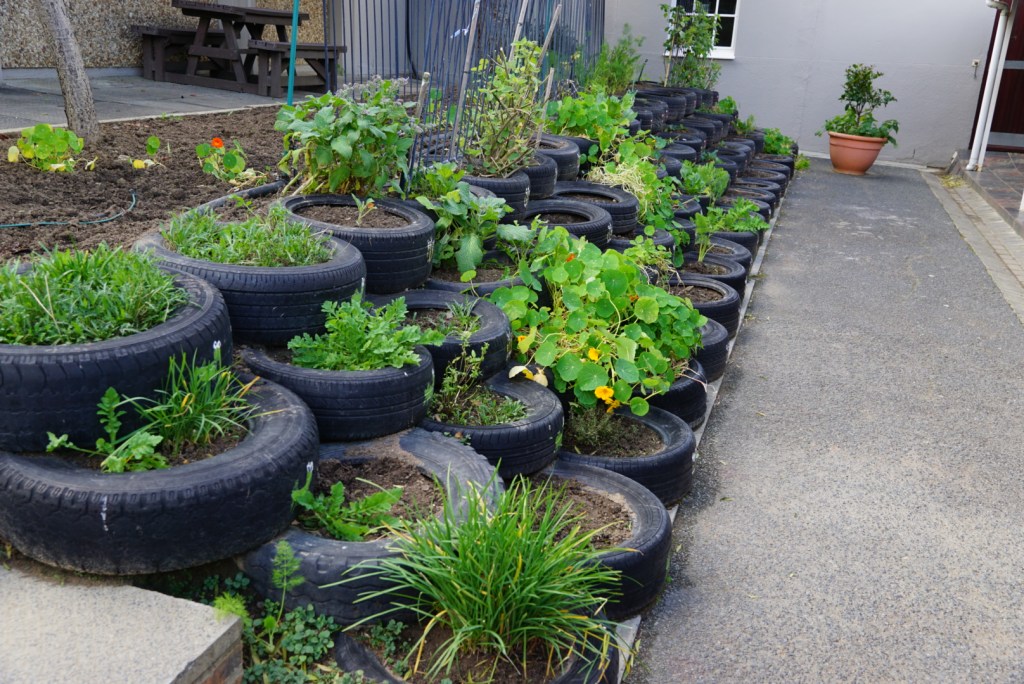
The third graders have a garden area and each student gets two tires in which to plant. It was winter during my visit, so there wasn’t as much growing as in other seasons.
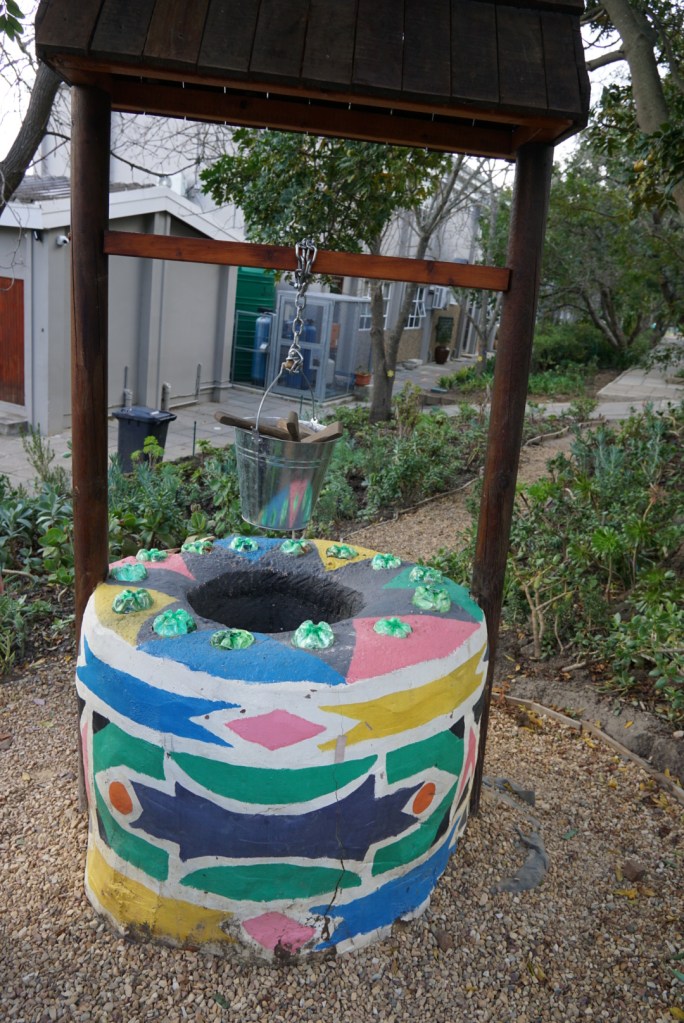
Students are actively involved in projects to improve the school. Some of the older students built this well using traditional materials and methods, with the modern addition of eco bricks.
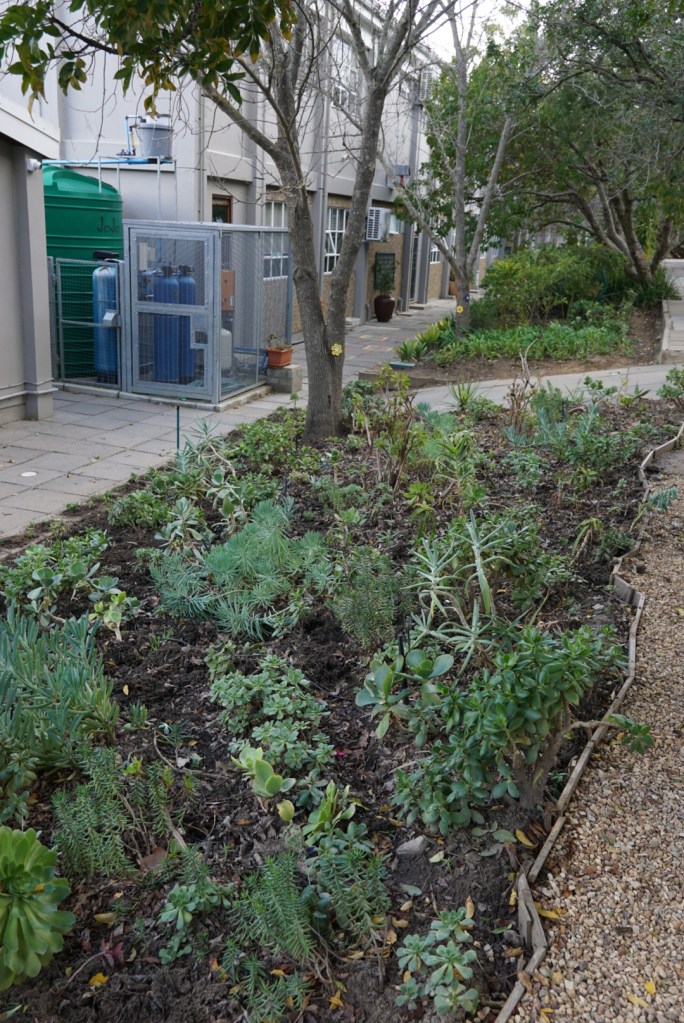
Students also contributed to the native plant garden by bringing succulent clippings and recycled water from home.
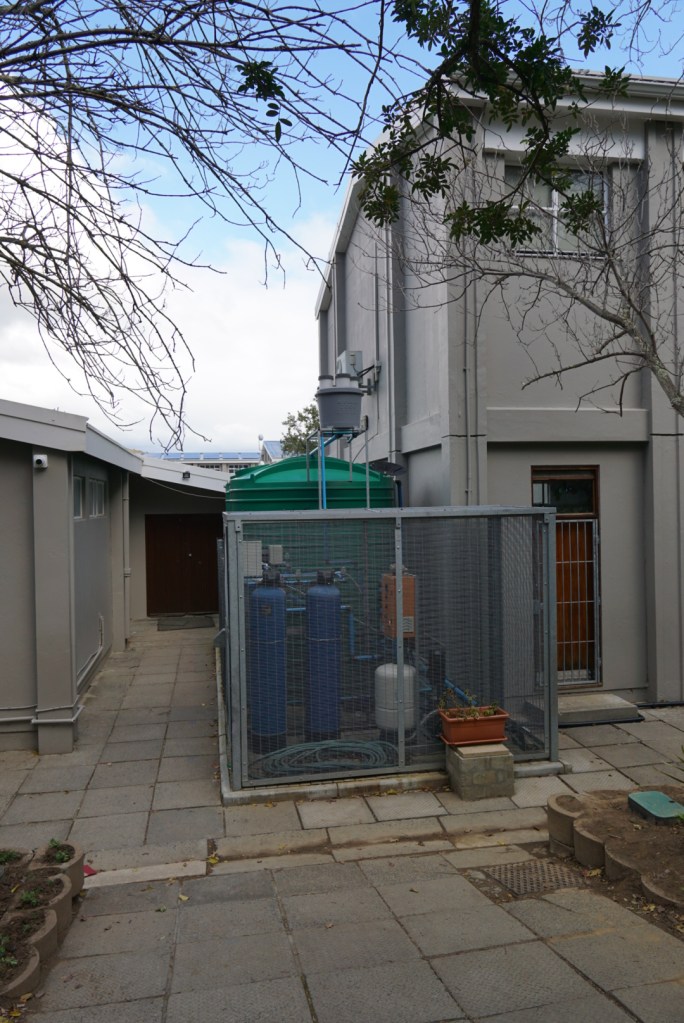
The school also recycles water through the use of a grey water system. Each year, they focus on a different theme and this year, the focus was water. The theme is woven into the curriculum, as mentioned above with the hydroponic garden. 7th grade students also collaborated with students in the Netherlands on a project for designing water systems for their respective communities.
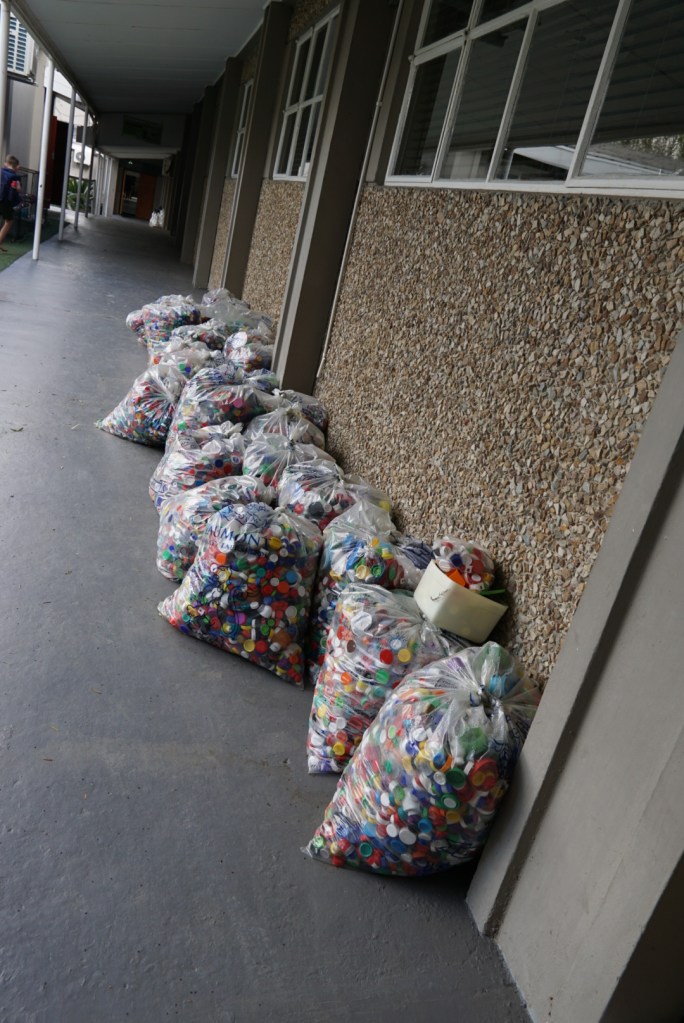
In order to maintain the Eco-School status, schools have to focus on certain core areas: Healthy Living, Resource Use, Nature and Biodiversity, Global Issues, and Community and Heritage. Under the community bucket, Beaumont is involved in many community service projects. One example, is that they collect bread bag tabs and bottle tops, which are sold to a company that reuses the plastic. The money they earn is used to donate wheelchairs to the community. One grade is responsible for this project.
3rd-grade students also collect bedding, toys, and food for foster animals.
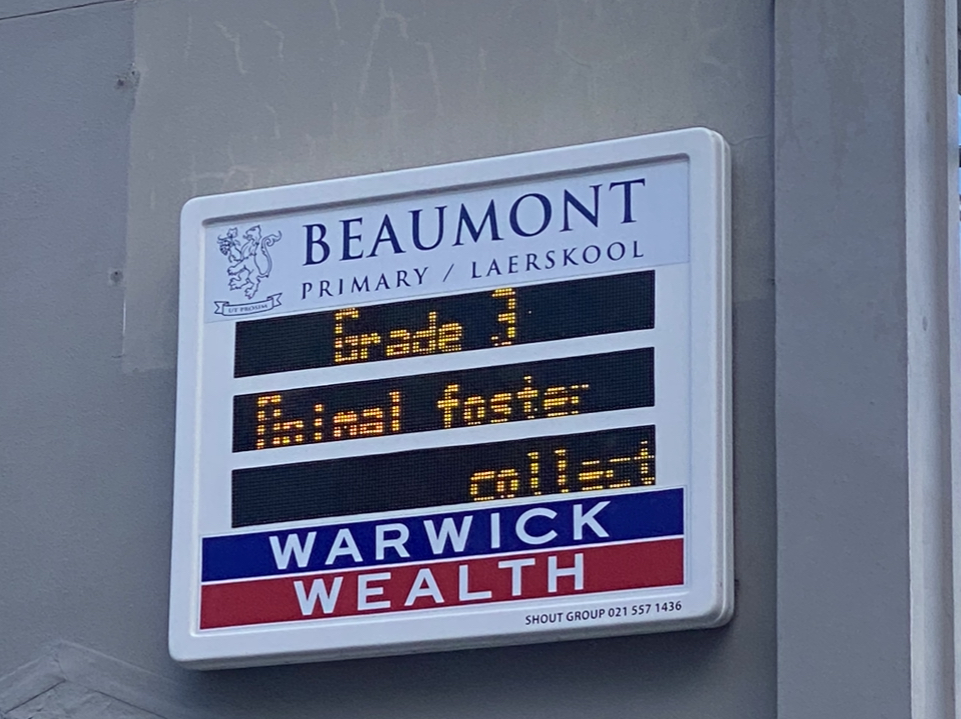
These examples are just some of the many ways that Beaumont integrates community service into the school while also tying in the themes of waste reduction and caring for animals.
The Eco-Schools program exists in the U.S. and I am excited to learn more about steps we might take at Curtis to be part of this amazing movement.
 South Africa Travel Grant
Leave a comment